#1 Hawaii Solar Battery Installer
- Founded in 1986 with Thousands of Installs Across Hawaii
- Offering Tesla, SunPower and Generac Solar Batteries
Trust Your Hawaii Solar Battery Investment to the Experts
Rising Sun Solar has been installing solar batteries across Hawaii since 2003 from Oahu to Kauai and Maui to the Big Island, we have you covered. Our solar company is locally owned and operated, we have grown our prestige by consistently offering the best solar batteries at the best price possible making us the premier solar battery installer in Hawaii. Not only will you want to tell your Auntie that we did a great job for your ohana but we want you to refer us to your friends and leave us a great online review too.
We have assisted thousands of local folks across the State of Hawaii to take advantage of the tremendous benefits that come with switching to solar energy. An essential part of this process is making sure you have the best battery and overall solar energy system possible to suit your unique needs. Just as importantly, we stand behind our solar batteries and services so you can rest assured you are not only getting the best batteries possible but a solar energy system that works for you.
Our expertise not only applies to solar batteries and solar energy systems but our staff of experienced technicians will make sure you get the most current technology and products in the industry and we will take the time to answer your questions and the various and ever-changing tax credits and benefits that come with a solar installation on your island. Whether you reside on Maui, Kauai, the Big Island, or Oahu, we have answers to your solar energy and solar battery questions.
Additionally, we take care of our customers and service our solar power systems making sure that you grow with us over time to take advantage of new products and services as the Solar energy industry matures. Examples of continuing to provide value to our customers after initial installation include EV charging station installations, our Swell battery rewards program, battery bonus, and our Span Smart circuit breaker products.
Contact our Hawaii solar battery experts so we can learn more about your home and your energy and solar battery storage need so we can help you design and install the best solar energy system for you and your family.

Protect Yourself from Rising Electric Costs with a Hawaii Solar Energy and Battery System
Did you know that Hawaii has one of the highest electricity costs of any State in the nation? We also enjoy some of the highest number of sunny days per year compared to other US States and Counties. This makes installing a Hawaii solar battery system not only the right thing to do for our planet but also a smart economic choice for you and your family. No two customers’ needs are the same and that is why we take the time to make sure we fully understand your needs to help you develop a solar energy and battery storage system that is build specifically to address your unique situation.
Our Solar Battery Customers Love Us

Not only do we have an industry-leading Refer a Friend Program but we also have an A+ BBB rating and dozens of five-star reviews on Google from past customers across Hawaii. We want to earn your business and look forward to the chance to exceed your expectations as you invest in a Solar Energy and battery backup system for your Hawaii home or business.
Get Started Now and always save on Your Energy Bill
We will custom design and install a solar system for your home so you can lock in electricity savings for the next 20 years.
Hawaii Solar Financing
Let our Pros answer your questions and navigate you through the often confusing financing questions involved in installing a Solar Energy and solar battery system on Maui, Kauai, the Big Island, or Kauai.
Questions you should be considering:
- How many solar batteries should I install?
- Should I own or lease the system?
- How much money should I put down on the system?
- What County, State, and Federal solar tax credits, rebates and incentives do I qualify for an how to do I apply for them?
- When does the current Federal Solar Investment Tax Credit (ITC) expire and how do I qualify?
- What is the Hawaii Renewable Energy Technologies Income Tax Credit (RETITC) and how do I qualify?
- How does a Solar Energy and Solar Battery Backup System impact the value of my home?
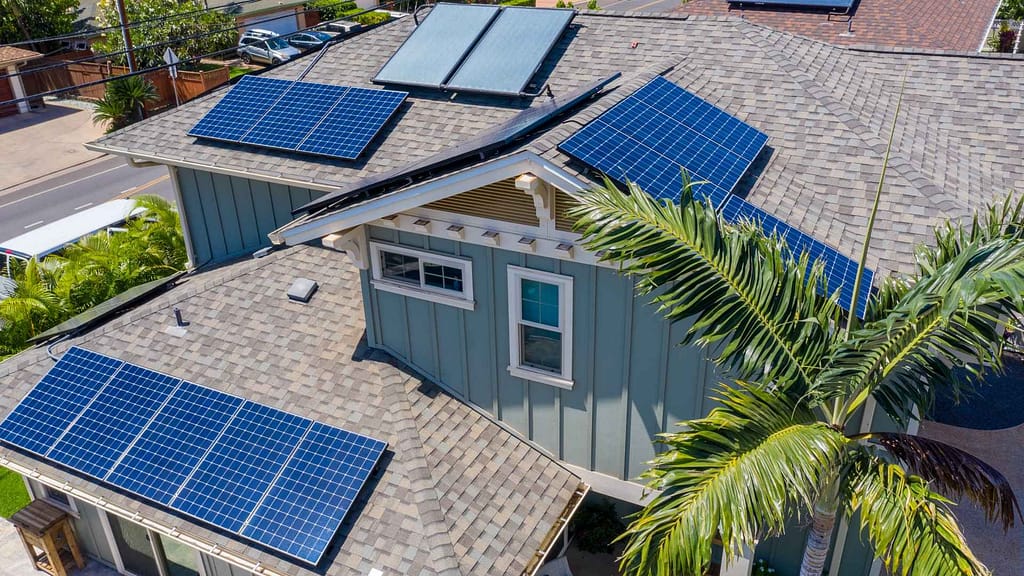
We Install Solar Roofs across Hawaii Too
A solar panel system might not be the best option for you and your energy and storage needs. Rising Sun also installs and maintains Solar Roofs in Hawaii and their associated solar batteries. We are certified Tesla Installers with significant experience installing solar roofs and battery backups across our State.
Areas We Install Solar Batteries
(from Kapalua to Kula)
(from Haena to Kekaha and Poipu to Princeville)
(from Kona to Hilo)
(from Honolulu to Haleiwa)
Get A Free Solar Energy and Solar Battery Estimate Today!
Get a free estimate from our expert Solar Energy Advisors to create and store your own clean energy in Hawaii and reduce your dependence on fossil fuels. Be part of the solution to help build a modern and more resilient energy system that runs on local, renewable electricity. When you go solar, you will have control of your home energy for the next 25 years or longer.
- Learn your ideal system size, panel and battery configuration
- Understand how solar incentives work
- Get your cost and timeline to switch to solar